SSR vs. SSG: The Eternal Battle of When to Render
SSR vs. SSG: The Eternal Battle of When to Render (And Why Developers Must Care)
Hello everyone! Following my recent article about switching to Astro, which focuses on Static Site Generation (SSG), it’s the perfect time to dive deep and explain a key difference in modern web development: Server-Side Rendering (SSR) versus Static Site Generation (SSG). These are the two primary strategies for delivering finished HTML to the user, and both have their place.
Server-Side Rendering (SSR): On Demand
Think of SSR as a chef preparing a meal (the page) every single time a customer (user) orders it.
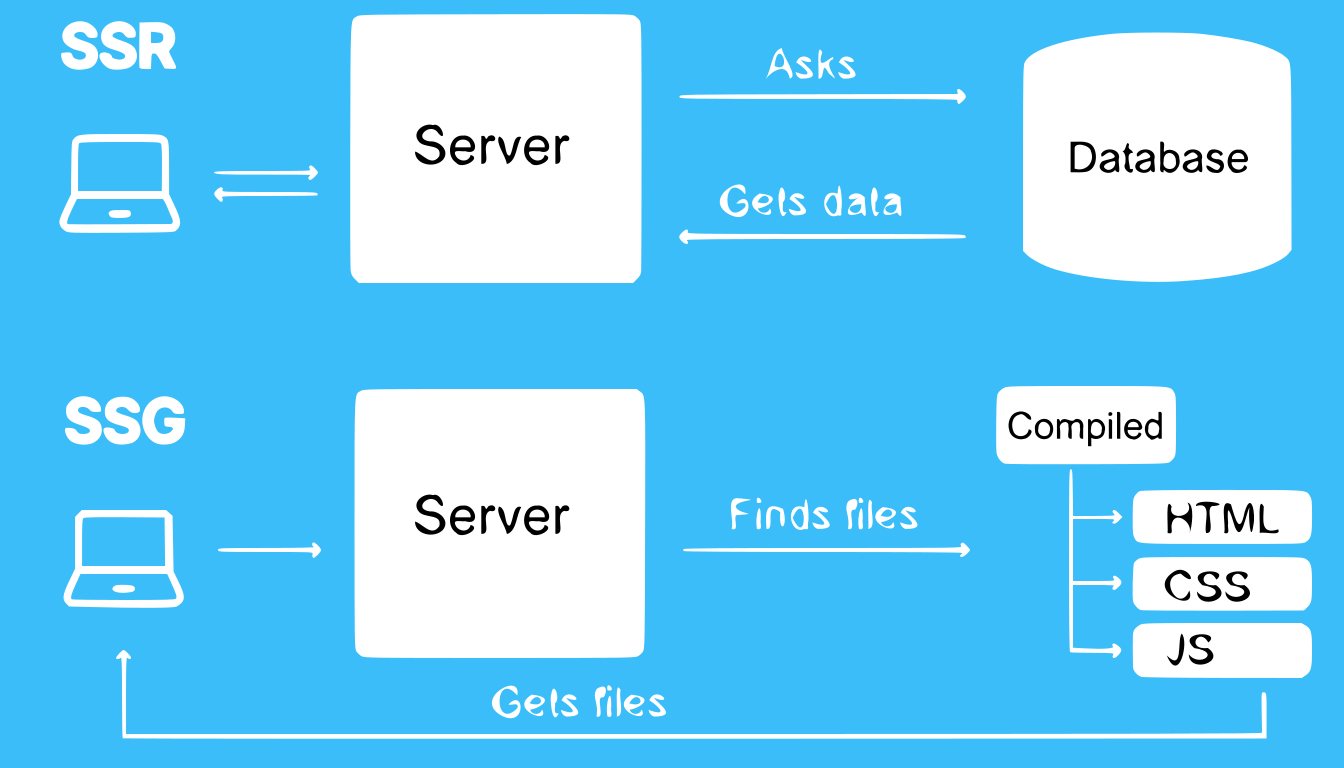
- How it works: A user clicks a link. The server receives the request in real-time, fetches the necessary data (e.g., from a database), renders the complete HTML page, and then sends it to the browser.
- When it’s ideal: When the content is highly dynamic and personalized. Typical examples include user dashboards, e-commerce sites with real-time inventory, or news sites with constant updates. The page is always up-to-date.
- My Experience: I use SSR for projects where data freshness is critical. The drawback is the higher load on the server—each visit means a new calculation and a longer TTFB (Time To First Byte) because the server must process everything before sending.
Static Site Generation (SSG): Pre-Baked and Ready
SSG, on the other hand, is like a massive bakery that prepares all the loaves (pages) in advance, during the build phase (deployment).
- How it works: All pages are generated into clean HTML, CSS, and minimal JS beforehand. When a user visits the page, no server is called; instead, an existing static file is delivered, often from a CDN (Content Delivery Network).
- When it’s ideal: For content that doesn’t change frequently. Classic examples are blogs (like mine), documentation, marketing sites, or company profiles.
- My Experience: The benefits of SSG are huge. The page is blazingly fast (because it’s just serving a file), cheap to run (no server load), and secure (because no live database is needed). With Astro, it works brilliantly because it allows me to add dynamic elements (comments, cart) later using the so-called Islands architecture.
Which Strategy to Choose? (The Developer’s Perspective)
As a developer, I make the decision based on data requirements and speed needs.
- Go with SSG (Astro, Gatsby): If the content is mostly static, you want maximum speed, SEO is crucial, and you don’t mind that an entire rebuild (or at least a specific page update using ISR/DSR) is required to update an article.
- Go with SSR (Next.js, Nuxt): If you need real-time data freshness, high personalization, and your site is more of a web application than a static presentation.
Moreover, many modern frameworks like Next.js and Nuxt now allow for a Hybrid Approach, where you can mix SSR and SSG for individual pages—and that is often the best way to get the best of both worlds.
Whichever you choose, the key is making a conscious decision that matches the project’s needs. It’s a fundamental building block for a high-performing and scalable website.